Published on September 13, 2026 · 6 min read
How to bring 150 guests from the US to a wedding in Colombia
Cartagena or Medellín, direct flights, room blocks, a three-day schedule and the timeline that makes it painless. What we have learned hosting weddings for couples flying in from the United States.
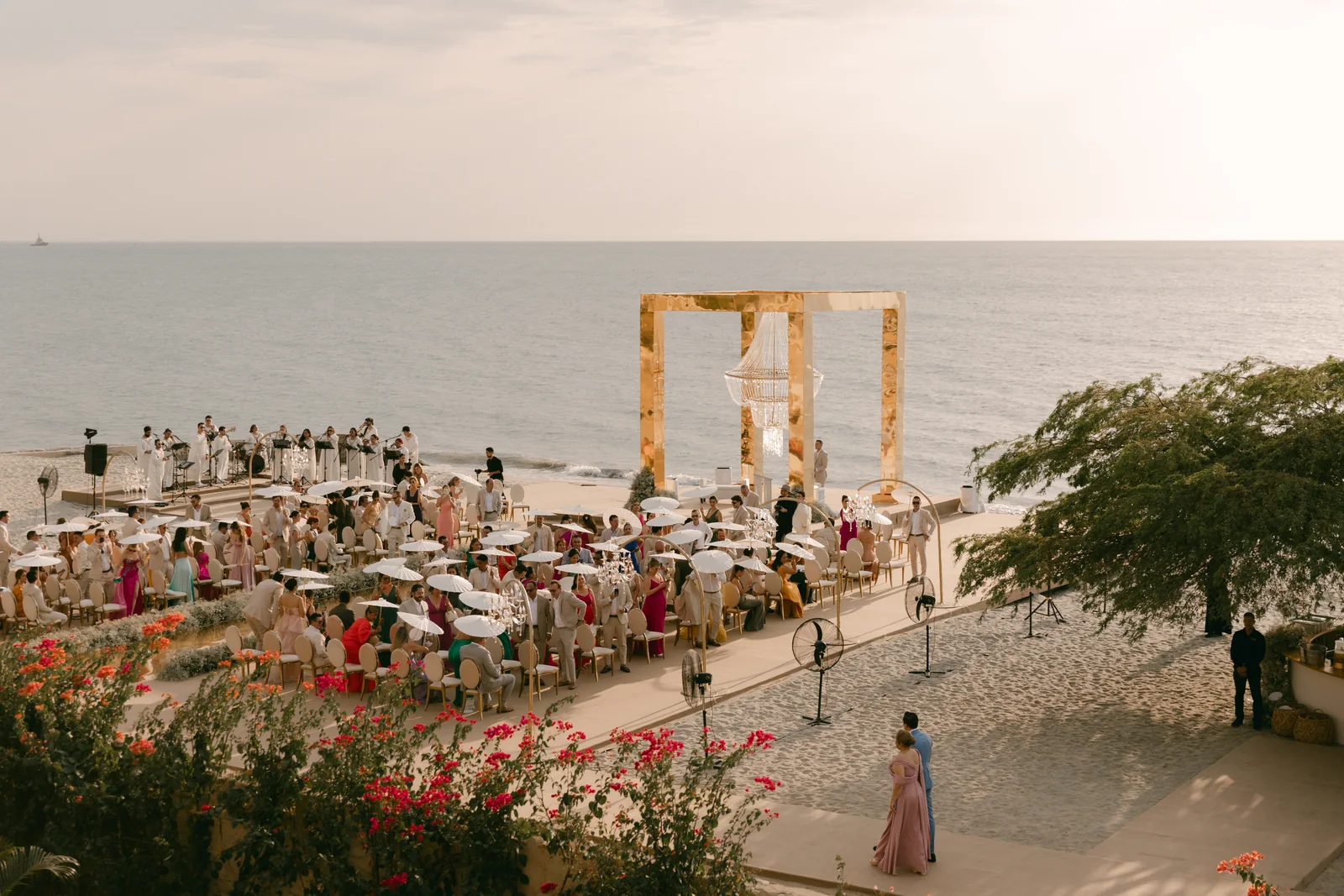
You said yes in Brooklyn or Miami, and now you want your people, all 150 of them, to celebrate with you in Colombia. It is a wonderful idea and a serious piece of logistics. We have done it many times, and the difference between a weekend your guests talk about for years and one that feels like work is almost always the planning done twelve months out. This is how we approach it, and why Cartagena and Medellín are the two cities we recommend most often to couples flying in from the United States.
First, pick the city that matches your wedding
Both cities are a short flight away, both have world-class hotels and both know how to host. But they are very different places, and that difference should drive the decision.
Cartagena is the Caribbean: a walled colonial city with cobblestone streets, rooftops over the sea and warm nights year-round. It is the choice for couples who want the wedding to feel like a holiday. Guests walk everywhere, the welcome party happens on a rooftop at sunset, and the ceremony can take place in a 400-year-old courtyard or on a beach on Barú, forty minutes away by boat. It is hot, around 86 °F most days, and humid. The dry season runs from December to April; September to November is the rainiest stretch.
Medellín is the mountains: a modern city in a green valley at 5,000 feet, with what Colombians call eternal spring, 72 to 75 °F all year, no altitude issues and no humidity. It is the choice for couples who want a designed wedding with room to build: the Orquideorama at the Botanical Garden, where we dressed a canopy of flowers in burgundy for Manuela and Juan Pablo, or a private estate like Casa El Rosal, where Vero and Andrés celebrated under bespoke paper lamps. Hotels in El Poblado are large and new, the food scene is excellent, and Medellín is, in our experience, the city American guests are most surprised by.
If your guests are mostly families with children and older relatives, Medellín's climate and hotel capacity make the weekend easier. If your crowd is younger and you want the trip itself to be the party, Cartagena is hard to beat.
Getting there is easier than most guests expect
There are direct flights to both cities from Miami and Fort Lauderdale (under three hours), from New York (around five and a half hours) and, depending on the season, from other hubs. Bogotá adds a short connection if a guest can't find a direct route. US citizens don't need a visa for stays under 90 days; they need a passport valid for the trip and, as of this writing, a short online immigration form completed before flying. No special vaccines are required for either city.
We build a one-page travel guide for your guests with the recommended flights, the hotel booking links and a WhatsApp number that answers in English. That page removes ninety percent of the questions you would otherwise get.
Hotels: this is where 150 guests get complicated
A hundred and fifty guests means roughly 75 to 80 rooms. In Medellín that fits comfortably in one or two hotels in El Poblado, ten minutes from each other, and we negotiate a room block nine to twelve months out. In Cartagena the beautiful hotels inside the walled city are small, twenty to forty rooms each, so your guests will be spread across three or four properties within walking distance of one another. That is fine, and it is part of the charm, but it needs to be organised early: the best rooms in Cartagena for a Saturday in January are gone by the previous spring.
We handle the room blocks, the cut-off dates and the guest list per hotel, so no one calls you asking whether the Sofitel still has a suite.
Think in weekends, not in a day
A destination wedding is three days, and each one has a job.
- Thursday: arrivals. A private shuttle meets every flight, so the first Colombian face your guests see is ours, holding a sign with your names.
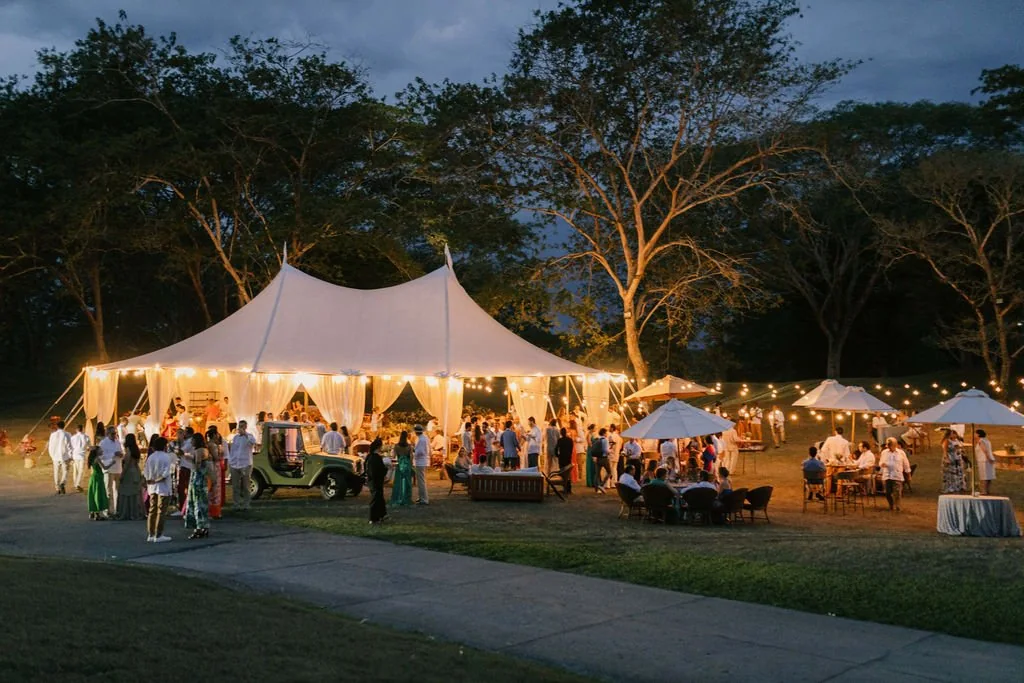
- Friday: the welcome party. Casual, open to everyone, two to three hours. In Cartagena, a rooftop with the sun going down over the sea; in Medellín, a terrace in El Poblado or a garden outside the city. It is where the two families finally meet, and it takes the pressure off the wedding day.
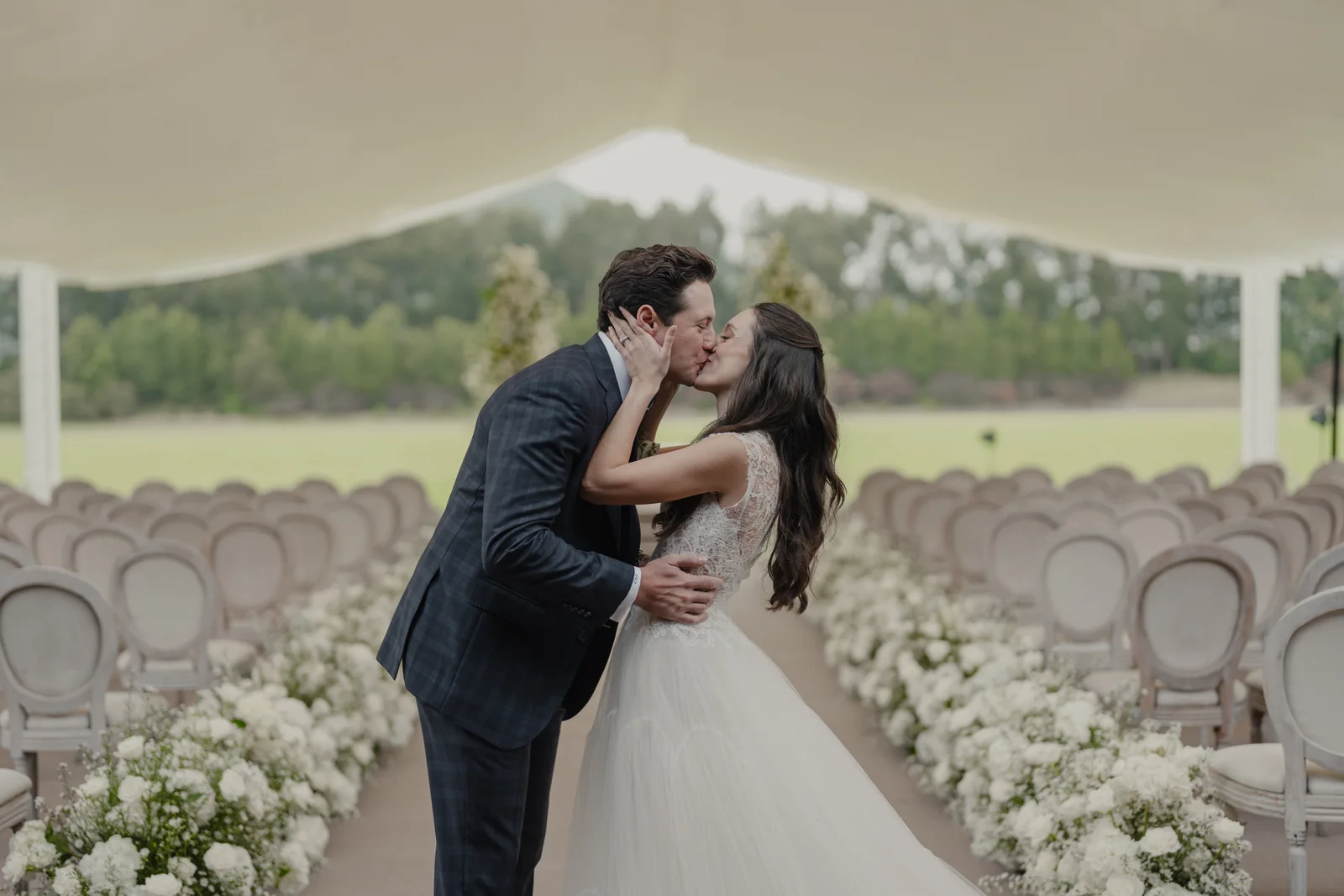
- Saturday: the wedding. Ceremony in the late afternoon, when the light is right and the heat has passed. Buses from the hotels to the venue and back, with the last one leaving after the last song.
- Sunday: a farewell brunch, late, no dress code. Guests fly out from the afternoon on.
We plan the transport for every one of those moves: how many buses, which hotel they leave from, at what time, and who is on each one. In Cartagena that is often walking and a few boats; in Medellín it is a fleet of vans timed to the minute.
The small things that make Americans feel at home
- Money: Colombian pesos, but cards work everywhere your guests will go. Restaurants add a ten percent service charge; no extra tipping is expected.
- Language: your planner, your hotel concierge and the guest WhatsApp line answer in English. We brief every vendor on the day so nobody has to translate a toast.
- Health and safety: both cities are used to international visitors. We stay in the neighbourhoods where things happen, El Poblado, the walled city, Getsemaní, and we tell guests exactly that.
- Dietary needs, allergies, kosher requirements and wheelchair access are gathered with the RSVP and passed to every venue and caterer in advance.
The timeline that makes it painless
- 12 to 18 months out: choose the city, the venue and the date. Book the room blocks.
- 9 to 12 months out: save the dates go out, with the travel guide. For a destination wedding this is not optional; people need to plan vacation days and flights.
- 4 to 5 months out: invitations and the wedding website with the full schedule.
- 8 weeks out: RSVP deadline, with flights and hotel confirmed for each guest.
- 2 weeks out: the final list per hotel, per bus and per table.
What it costs to bring guests in
Couples usually cover the welcome party, the wedding and the brunch, and the ground transport between them. Guests pay their flights and hotel, and a negotiated room block keeps that reasonable. Some families cover a night or two for close relatives. There is no rule; what matters is that the invitation makes it clear, kindly and early, what is covered and what is not.
Cris and Conor brought their families from abroad to a black pavilion on a polo field. Majo and Kyle brought theirs to an island on Barú. Neither of them handled a single bus schedule. That is the whole point of doing this with a team on the ground: your guests get Colombia, and you get to be at your own wedding.
If you are thinking about Cartagena or Medellín for your wedding, write to us. We will tell you honestly which one fits your guest list, and what the weekend would look like.